

A Landscape That Reflects the Byron Bay Lifestyle
Byron Bay holds a rare kind of appeal. It’s not just the coastline or the climate — it’s the pace, the openness, and the connection to nature that defines how people live here.
Outdoor spaces are not separate from the home. They are part of daily life. Morning light filters through soft planting, afternoons drift between shaded seating and open lawns, and evenings settle into spaces designed for connection and calm.
Working with experienced landscapers in Byron Bay is about understanding this rhythm. It’s not about creating something overly structured or heavily styled. Instead, it’s about refining the natural qualities of the site and shaping them into something that feels effortless, yet deeply considered.
Designing for Climate, Comfort, and Longevity
The Byron Bay environment is as demanding as it is beautiful. Coastal exposure, humidity, intense sunlight, and seasonal rainfall all play a role in how landscapes perform.
A successful design begins with these conditions, not after them.
Shade is carefully integrated — not just through structures, but through layered planting and canopy trees. Airflow is prioritised to prevent spaces from feeling enclosed or heavy. Materials are selected for their ability to remain comfortable underfoot and resilient over time.
Rather than creating a garden that looks impressive for a moment, the focus is on longevity. A space that continues to perform, season after season, without requiring constant intervention.
The Subtle Art of Simplicity
One of the defining characteristics of Byron Bay landscaping is restraint.
There is a tendency in many landscapes to add more — more structure, more features, more visual elements. In Byron Bay, the opposite is often true.
The most compelling spaces are those that feel open and uncluttered. Planting is soft and layered, rather than dense and overwhelming. Materials are natural and understated, allowing texture to take precedence over colour.
This simplicity is not accidental. It requires careful editing — knowing what to include, but more importantly, what to leave out.
The result is a space that feels calm, grounded, and easy to live within.
Outdoor Living as an Extension of the Home
In Byron Bay, outdoor living is not occasional. It is embedded in everyday life.
Spaces are designed to support this seamlessly. Indoor areas transition naturally into outdoor zones, often without clear boundaries. Flooring materials continue outward, sightlines remain open, and planting softens the edges of built structures.
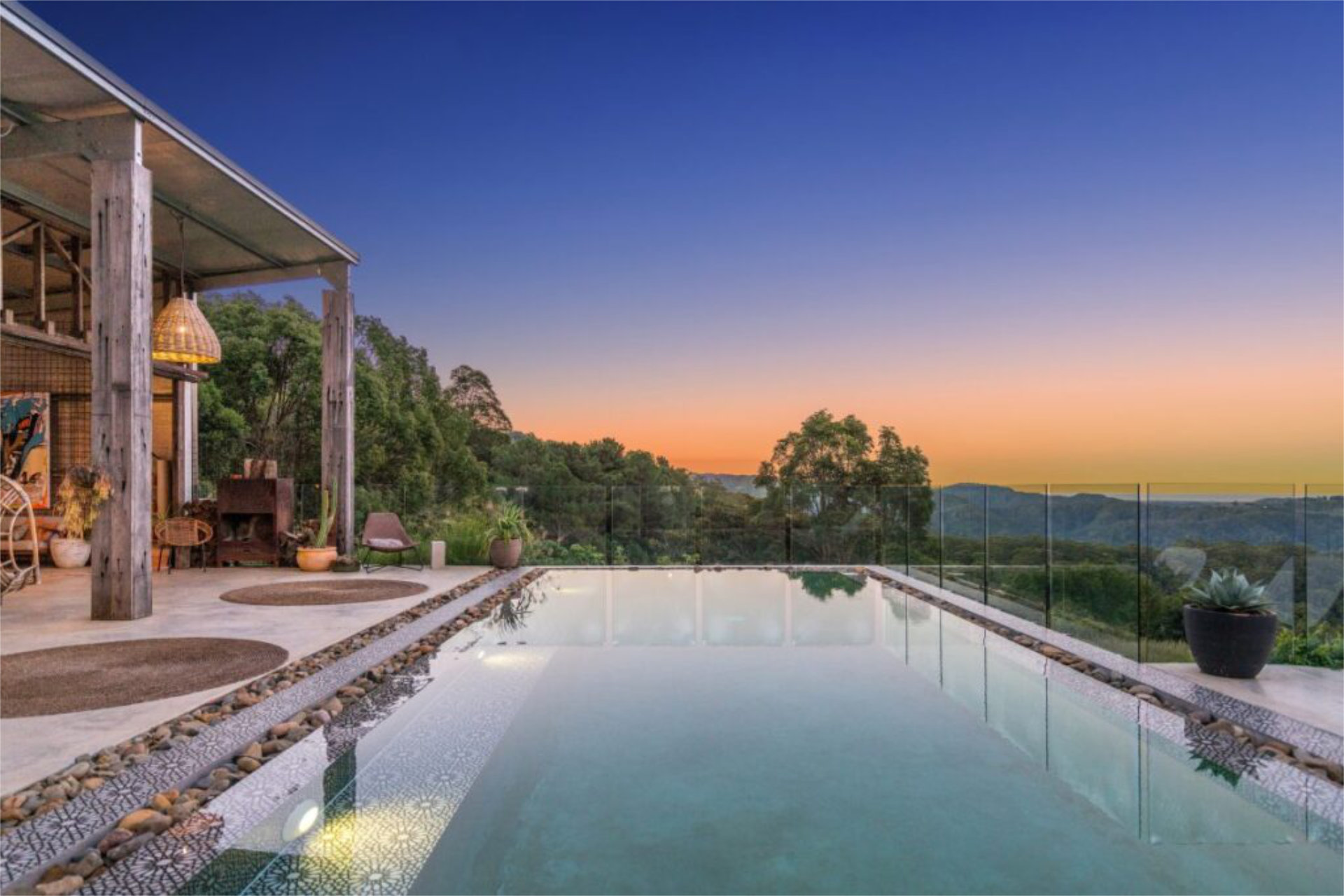
Entertaining areas are positioned to capture breezes and natural light. Pool zones are integrated into the landscape rather than sitting apart from it. Quiet corners offer retreat, without feeling disconnected from the rest of the space.
This layered approach creates a garden that feels both social and private — adaptable to different moments throughout the day.
Materials That Feel Honest and Enduring
Material selection in Byron Bay landscapes is guided by authenticity.
Timber, natural stone, and textured finishes are chosen not only for their appearance, but for how they feel and age. These materials soften over time, developing a patina that enhances the overall aesthetic.
There is a deliberate avoidance of overly polished or synthetic finishes. Instead, the focus remains on materials that feel grounded and appropriate to the environment.
This creates a sense of continuity — where built elements and natural surroundings feel connected rather than contrasting.
Planting That Moves With the Environment
Planting in Byron Bay landscapes is designed to feel alive.
Grasses sway with coastal breezes. Layered foliage creates depth without heaviness. Native and climate-adapted species provide resilience while maintaining visual softness.
Rather than rigid planting schemes, the approach leans towards natural groupings and repetition. This creates rhythm and cohesion, allowing the garden to feel intentional without appearing overly structured.
Over time, planting becomes one of the most dynamic elements of the landscape — shifting with the seasons and adding a sense of movement and life.
Sustainability as a Natural Outcome
Sustainability in Byron Bay is not an added feature — it is inherent in good design.
Water-efficient planting reduces reliance on irrigation. Passive cooling strategies minimise the need for artificial systems. Soil health is supported through natural processes rather than heavy intervention.
This approach aligns with the broader lifestyle of the region, where environmental awareness and design go hand in hand.
The result is a landscape that not only looks refined, but operates efficiently and responsibly.
Designing for Emotional Experience
Beyond functionality and aesthetics, the most successful landscapes in Byron Bay offer something deeper — a shift in how the space feels.
They encourage slower living. They create moments of stillness. They provide a sense of escape that is subtle, yet powerful.
This emotional layer is what elevates a landscape from well-designed to truly memorable.
It’s not just about how the garden looks. It’s about how it makes you feel when you step into it.
The Role of Design Visualisation
Even the most relaxed landscapes require precision in planning.
Through advanced design processes, including detailed 3D visualisation, every element is resolved before construction begins. This ensures the final space feels effortless — even though it has been carefully considered at every stage.
A Landscape That Lives and Evolves
A Byron Bay garden is never static. It grows, shifts, and adapts over time.
Plants mature, spaces settle, and the overall composition becomes more refined. This evolution is part of the design — not something to be controlled, but something to be guided.
The result is a landscape that feels increasingly connected to its environment and the people who live within it.
FAQs — Landscapers Byron Bay
What defines luxury landscaping in Byron Bay?
A balance of simplicity, natural materials, and thoughtful design that enhances lifestyle without feeling overdone.
How do coastal conditions affect landscape design?
They influence plant selection, material choice, and layout to ensure durability and comfort.
Can I achieve privacy without closing off the space?
Yes, through layered planting and strategic positioning rather than heavy structures.
Is a design plan necessary before landscaping?
Absolutely — it ensures clarity, cohesion, and a refined final outcome.